An Overview of the Transition from Rule-Based Systems to Neural Networks
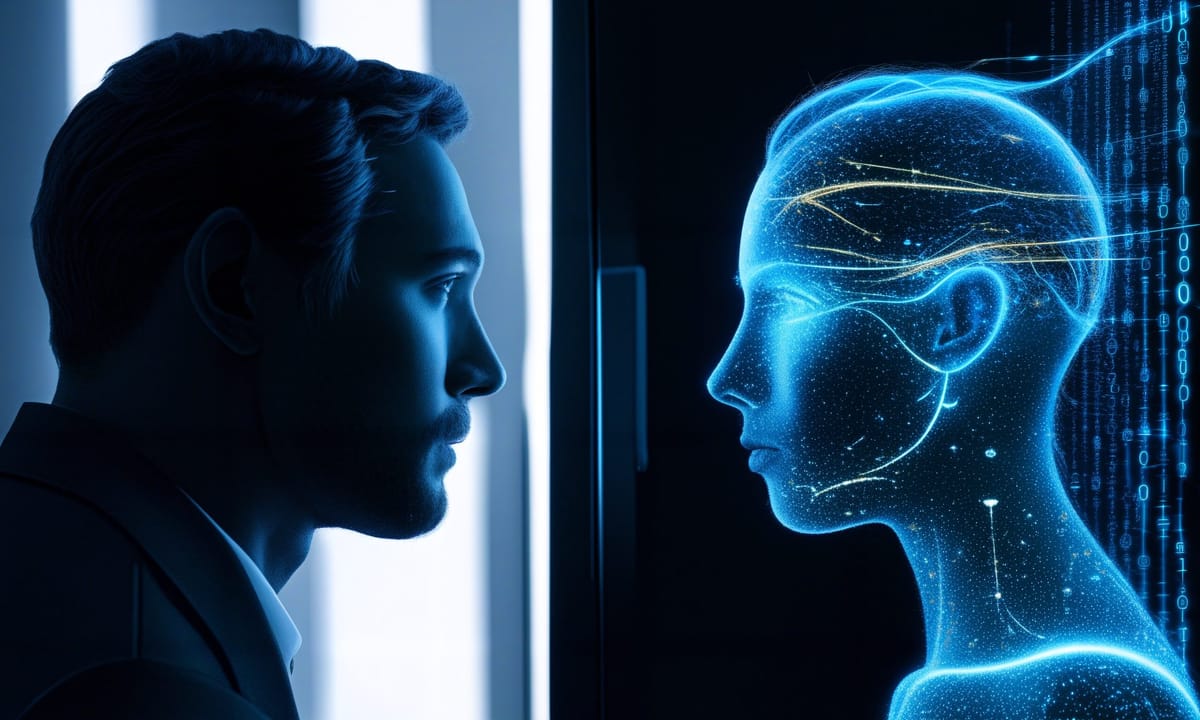
In the mid-20th century, the pioneers of AI operated under a philosophy known as Symbolic AI (or "Good Old Fashioned AI"). The prevailing theory was that intelligence could be distilled into a series of logical rules. If you could simply write down enough "if-then" statements, a machine could navigate the world.
Imagine a massive, intricate flowchart. If a user asks for a specific piece of information, the computer follows a path of predefined branches. This approach succeeded brilliantly in closed systems—environments with rigid rules and predictable outcomes. It allowed computers to play chess, solve complex algebraic equations, and manage logistics. However, it hit a wall when faced with the messy, ambiguous reality of the physical world. A rule-based system can easily define what a square is; it struggles immensely to define what a "chair" is, because chairs come in infinite shapes, colors, and textures.
This was the first great limitation: machines could follow instructions, but they could not perceive patterns. They were masters of syntax, but strangers to semantics.
The Connectionist Pivot: Mimicking the Biological Loom
As the limitations of symbolic logic became apparent, a different philosophy began to take root: Connectionism. Instead of teaching a machine rules, why not teach it patterns?
This shift led us toward the development of Neural Networks—computational models inspired by the biological architecture of the human brain. In these systems, information is processed through layers of interconnected "neurons" (mathematical functions). When a neural network learns, it isn't following a script; it is adjusting the strength of these connections based on feedback.
Think of a child learning to recognize a dog. You don’t explain the geometry of a canine; you point at various dogs until the child’s brain identifies the recurring features—the fur, the tail, the snout. A neural network does something similar. It processes raw data, identifies correlations, and refines its internal weights until it can distinguish a dog from a cat with startling accuracy.
However, early neural networks were fragile. They required immense amounts of data and massive amounts of computing power—resources that were scarce in the 1980s and 90s. This led to the "AI Winters," periods where funding dried up and interest waned because the machines simply weren't capable of the feats we promised them. The spark was there, but the fuel was missing.
The Deep Learning Revolution: The Power of Scale
The tide turned in the 2010s, fueled by three converging forces: the explosion of Big Data (the internet providing billions of images and texts), the rise of powerful Graphics Processing Units (GPUs) capable of performing millions of calculations simultaneously, and algorithmic refinements in "Deep Learning."
Deep Learning refers to neural networks with many hidden layers—hence the term "deep." In these systems, each layer acts as a filter. One layer might detect simple edges; the next, complex shapes; the third, specific objects like eyes or wheels. By stacking these filters, machines began to achieve superhuman performance in image recognition and speech translation.
This era transformed AI from a laboratory curiosity into an industrial tool. We saw machines that could out-perform doctors in spotting tumors on X-rays and cars that could navigate city streets. But even here, there was a lingering problem: while these models were excellent at discriminative tasks (identifying what something is), they struggled with generative tasks (creating something new). They could recognize a face, but they couldn't "imagine" one.
The Transformer and the Architecture of Attention
The most profound leap toward our current moment arrived in 2017 with the introduction of the Transformer architecture. This was the breakthrough that allowed AI to move from recognizing patterns to understanding context.
At the heart of the Transformer is a mechanism called "Attention." To understand why this matters, consider how you read this sentence. You don’t process every word in isolation; your brain assigns different levels of importance to different words based on their relationship to one another. When you see the word "it," your brain instantly links it back to a noun mentioned three words prior.
Early AI models processed text linearly—one word at a time, from left to right. They often "forgot" the beginning of a long sentence by the time they reached the end. The Attention mechanism changed everything. It allowed the model to look at an entire sequence of data simultaneously and "attend" to the most relevant parts. It gave the machine a way to weigh the importance of context, allowing for a much more nuanced understanding of human language.
The Generative Explosion: From Prediction to Creation
This architectural shift paved the way for Large Language Models (LLMs). By training Transformers on nearly the entirety of the digitized human record—books, code, articles, and conversations—researchers created models that could predict the next token in a sequence with uncanny precision.
But here is where the magic happens: when you train a model to predict the next word perfectly, it inadvertently learns the underlying structure of logic, humor, and even creativity. We moved from machines that could categorize the world to machines that could simulate its expression.
We are no longer just asking a computer to find a file; we are asking it to write a poem in the style of Sylvia Plath, debug a Python script for a startup, or generate a photorealistic image of a futuristic city based on a single sentence. This is the era of Generative AI, where the "ghost" in the machine seems to have found a voice.
The Horizon: A Mirror, Not a Mind
Current AI models do not possess "consciousness" in the way humans do. They are, instead, incredibly sophisticated mirrors, statistical engines that reflect the vast sum of human knowledge back at us. They are capable of synthesis without sentience; they can mimic empathy without experiencing emotion.
How do we navigate a world where the line between human-generated and machine-generated content is increasingly blurred? And perhaps most importantly, what does it mean for us when a machine can simulate the very things we thought were uniquely ours, creativity, reasoning, and communication?
We have built a tool that mimics the architecture of our thoughts. Now, we must decide how we will use the echoes it produces. The journey from the first logic gate to the modern Transformer was about teaching machines to think; the next chapter is about learning what it means for us to live alongside them.

Comments ()